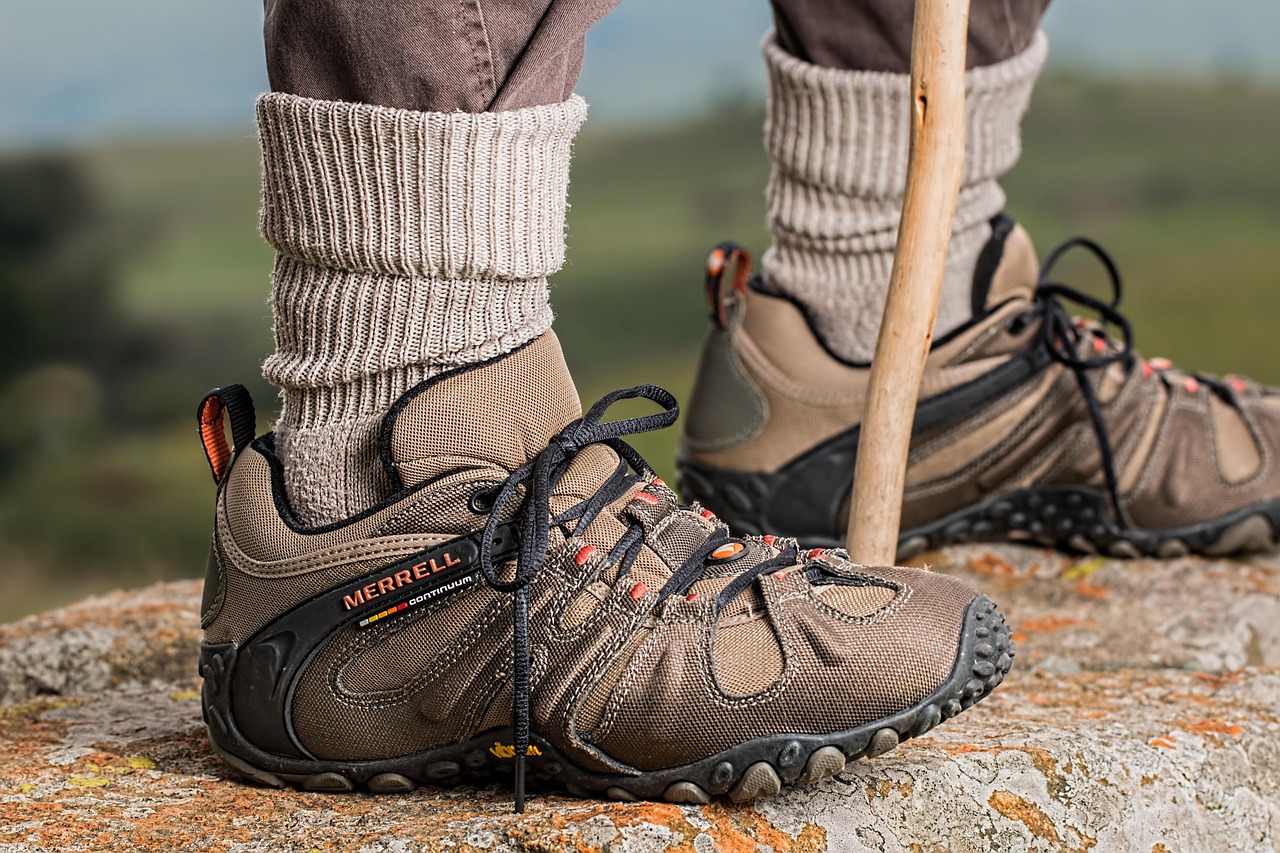
Every step you take sends forces through your body, and the shoes you wear play a surprising role in how those forces affect your joints, muscles, and overall movement quality.

Understanding the relationship between midsole hardness and your body’s biomechanics can transform how you approach footwear selection, potentially reducing injury risk and enhancing performance. The cushioning beneath your feet isn’t just about comfort—it’s a critical interface that influences everything from knee stress to running efficiency.
🔬 The Science Behind Midsole Hardness and Joint Loading
Midsole hardness refers to the firmness or compliance of the cushioning layer between your foot and the ground. This seemingly simple characteristic creates complex interactions with your musculoskeletal system during every stride, jump, or walk.
When your foot strikes the ground, impact forces travel upward through your ankle, knee, hip, and spine. The midsole acts as the first line of defense, absorbing some of this energy and changing how much force reaches your joints. Researchers measure midsole hardness using Shore durometer scales, with softer materials typically rating between 40-55 Shore A and firmer materials reaching 60-75 Shore A or higher.
Studies have shown that softer midsoles can reduce peak impact forces by 15-30% compared to harder alternatives. However, the relationship isn’t straightforward—softer doesn’t always mean better for joint health. The key lies in understanding how different hardness levels affect your individual biomechanics and movement patterns.
How Impact Forces Travel Through Your Body
Ground reaction forces during running can reach 2-3 times your body weight, while walking generates forces around 1.2 times body weight. These forces don’t disappear—they’re either absorbed by your shoe, dissipated through tissue deformation, or transferred to skeletal structures.
The midsole hardness determines the balance between these pathways. A harder midsole transfers more force directly to your joints but provides better stability and energy return. A softer midsole absorbs more shock but may increase muscular demand to maintain stability and can reduce proprioceptive feedback from the ground.
⚖️ Finding the Balance: Joint Protection vs. Performance
The ideal midsole hardness varies based on your weight, running style, injury history, and performance goals. What works for a lightweight competitive runner differs dramatically from what benefits a heavier recreational jogger recovering from knee pain.
Softer midsoles excel at reducing peak impact forces, which theoretically should decrease stress on joints like the knee and ankle. Research from biomechanics laboratories has demonstrated that shoes with softer cushioning can reduce tibial shock by up to 42% compared to minimal footwear options.
However, the body’s response to softer cushioning isn’t passive. When you land on a soft surface, your neuromuscular system often compensates by increasing muscle activation and altering movement patterns. This phenomenon, called “preferential movement path,” means your body may actually work harder to maintain stability on very soft surfaces.
The Joint-Specific Impact Story
Different joints respond uniquely to midsole hardness variations:
- Ankle joints: Softer midsoles allow greater ankle range of motion, which can be beneficial for shock absorption but may challenge stability in individuals with weak ankle musculature.
- Knee joints: Moderate cushioning tends to reduce knee loading during both walking and running, with studies showing 5-15% reductions in peak knee adduction moments.
- Hip joints: The relationship here is more complex, with some research suggesting that midsole hardness has minimal direct effect on hip loading patterns.
- Spine: Softer midsoles may reduce spinal loading during heel-strike running but show less benefit during forefoot striking patterns.
🏃 Stride Mechanics: How Midsole Hardness Changes Your Gait
Your running and walking mechanics adapt to the surface you’re moving on, and midsole hardness creates a “surface feel” that triggers these adaptations. Harder midsoles typically encourage a more forefoot or midfoot strike pattern, while softer cushioning may promote heel striking in some runners.
Ground contact time—the duration your foot remains in contact with the surface—increases with softer midsoles. While this might seem disadvantageous for speed, it can actually reduce loading rates, which are the speed at which forces build up in your body. High loading rates have been linked to stress fractures and other overuse injuries.
Stride length and cadence also respond to cushioning changes. Runners typically take slightly shorter, more frequent steps in softer shoes, a pattern that generally reduces impact forces but may increase metabolic cost. The trade-off between comfort and efficiency becomes a personal equation based on your priorities.
Energy Return and Running Economy
Harder midsoles generally provide superior energy return—the ability to convert stored elastic energy back into forward propulsion. This explains why racing flats and competition shoes typically feature firmer cushioning despite generating higher impact forces.
Modern footwear technology has challenged this paradigm with advanced materials that combine softness with high energy return. Carbon-plated shoes with specially formulated foams demonstrate that it’s possible to achieve both cushioning and performance, though these benefits come with higher price tags and specific use-case scenarios.
🎯 Matching Midsole Hardness to Your Needs
Selecting the right midsole hardness requires honest assessment of your biomechanics, training goals, and physical condition. No single hardness level suits everyone, and different activities may demand different approaches.
For Joint Health and Injury Prevention
If you’re dealing with joint issues or returning from injury, moderate to moderately-soft midsoles often provide the best compromise. They offer shock absorption without excessive instability that could challenge weakened stabilizer muscles.
People with osteoarthritis, particularly in the knee, frequently benefit from shoes with softer cushioning that reduce impact loading. Studies on this population have shown pain reduction and improved function with appropriate footwear modifications.
However, those with chronic ankle instability might find moderate-to-firm midsoles more beneficial, as excessive softness can increase wobble and proprioceptive uncertainty that leads to rolling or twisting injuries.
For Performance and Speed Work
Competitive runners and athletes focusing on speed typically gravitate toward firmer midsoles during race situations and tempo workouts. The improved ground feel and energy return translate to faster times, despite higher impact forces.
The key is periodization—using softer training shoes for easy runs and recovery days while reserving firmer options for quality sessions. This approach maximizes performance while managing cumulative joint stress across your training week.
📊 Comparing Midsole Materials and Their Impact
| Material | Typical Hardness | Impact Absorption | Energy Return | Durability |
|---|---|---|---|---|
| EVA (standard) | 50-60 Shore A | Moderate | Moderate | Good |
| TPU Foam | 55-65 Shore A | Moderate-High | High | Excellent |
| Supercritical Foam | 45-55 Shore A | High | Very High | Good |
| Dual-Density | Varies (40-70) | Variable | Moderate-High | Very Good |
This table illustrates how different foam technologies balance competing demands. Notice that newer materials like supercritical foams achieve both softness and high energy return—a combination once thought impossible with traditional materials.
🔄 The Adaptation Period: What to Expect When Changing Midsole Hardness
Switching to shoes with significantly different midsole hardness triggers biomechanical adaptations that require time. Your muscles, tendons, and motor control patterns have developed around your current footwear, and sudden changes can temporarily increase injury risk.
When transitioning to softer cushioning, expect to feel less ground contact and potentially more instability initially. Your stabilizer muscles will need to work harder, which may cause temporary fatigue in your feet, ankles, and calves. Gradually increase time in the new shoes over 2-3 weeks to allow adaptation.
Moving to firmer midsoles often creates opposite sensations—more ground feel but higher perceived impact. Your body will likely adjust stride mechanics, potentially shortening stride length or increasing cadence naturally. This transition also benefits from gradual implementation, particularly for runners with higher weekly mileage.
Signs You’ve Chosen the Wrong Hardness
Your body provides feedback when midsole hardness doesn’t match your needs. Watch for these warning signs:
- Increased joint pain, particularly in knees or ankles, that appears shortly after switching shoes
- Excessive foot fatigue or arch strain suggesting inadequate support for your weight and mechanics
- Recurring ankle rolls or instability indicating too much cushioning softness
- Feeling every bump and impact harshly, signaling insufficient cushioning
- Reduced performance or increased effort for the same paces without other explanation
💡 Practical Strategies for Optimizing Your Footwear Rotation
Elite athletes rarely wear the same shoe for every run, and recreational athletes can benefit from similar variety. Building a rotation with different midsole hardness levels addresses the varying demands of different workouts while spreading mechanical stress across different tissue loading patterns.
A well-designed rotation might include: soft, cushioned shoes for long, easy runs where joint preservation matters most; moderate cushioning for daily training where balance between protection and responsiveness matters; and firmer options for speed work where ground feel and energy return take priority.
This approach prevents your body from adapting to a single loading pattern, which may reduce overuse injury risk. It also extends shoe lifespan by rotating usage, allowing midsole foams to recover between uses—foam materials exhibit “compression set” but partially rebound with rest time.
🌟 Beyond the Midsole: Other Factors That Influence Joint Loading
While midsole hardness significantly impacts joint loading, it’s one variable among many. Stack height, heel-to-toe drop, upper construction, outsole geometry, and your orthotics or insoles all contribute to the total biomechanical effect.
Higher stack heights (more cushioning thickness) generally correlate with softer rides but can reduce stability and proprioception. Lower drops (smaller difference between heel and forefoot height) encourage midfoot and forefoot striking, which naturally reduces certain types of joint loading independent of midsole hardness.
Your running form, strength, flexibility, and fatigue state also dramatically influence how forces distribute through your body. Even the perfect midsole hardness can’t compensate for poor mechanics, muscle imbalances, or inadequate recovery between training sessions.
🚀 The Future of Midsole Technology and Joint Health
Footwear innovation continues accelerating, with materials science producing foams that once seemed impossible. Variable-hardness midsoles that transition from soft at impact to firm at toe-off represent one emerging direction, attempting to capture benefits of both extremes.
Smart shoes with embedded sensors can now measure your actual joint loading in real-time, providing data-driven feedback about whether your current midsole hardness suits your biomechanics. This technology remains expensive but will likely become more accessible as development continues.
3D-printed midsoles customized to your specific weight, foot structure, and movement patterns represent another frontier. Early research suggests these personalized approaches could optimize the cushioning-stability-energy return triangle better than one-size-fits-all manufacturing.

🎓 Making Your Informed Decision
Understanding midsole hardness empowers you to make footwear choices aligned with your body’s needs rather than marketing hype. The softest or most expensive option isn’t automatically best—the right choice depends on your unique biomechanics, goals, and physical condition.
If you’re currently pain-free and performing well, you’ve likely found a midsole hardness that works for you. If you’re experiencing joint discomfort, persistent injuries, or plateau in performance, experimenting with different cushioning levels might provide the breakthrough you need.
Consider consulting with a running specialty store that offers gait analysis, or seek guidance from a physical therapist or sports medicine professional for personalized recommendations. These experts can identify your specific movement patterns and suggest midsole characteristics that address your individual needs.
Your feet carry you through life, and the interface between them and the ground deserves thoughtful attention. Midsole hardness might seem like a minor detail, but its influence on joint loading, stride mechanics, and long-term musculoskeletal health makes it worthy of consideration. By understanding these relationships and choosing intentionally, you can step into comfort while supporting healthier, more sustainable movement patterns for years to come.