Walking on slopes and uneven terrain doesn’t have to be intimidating. With the right techniques and preparation, you can navigate challenging landscapes with confidence and safety.

Whether you’re an outdoor enthusiast exploring mountain trails, a hiker tackling rugged paths, or simply someone who wants to move more confidently through varied environments, mastering the art of walking on unstable ground is an essential skill. The ability to maintain balance, prevent injuries, and enjoy the adventure requires understanding your body mechanics, proper footwear selection, and strategic movement patterns that work with the terrain rather than against it.
🥾 Understanding the Biomechanics of Slope Walking
Your body naturally adjusts when encountering uneven surfaces, but conscious awareness of these adjustments can dramatically improve your stability. When walking uphill, your center of gravity shifts forward, placing increased demand on your quadriceps, calves, and hip flexors. Conversely, downhill walking engages your quadriceps eccentrically while requiring enhanced coordination from your core stabilizers.
The ankle joint becomes your primary shock absorber on uneven terrain, constantly making micro-adjustments to maintain balance. Your proprioceptive system—the sensory network that tells your brain where your body is in space—works overtime to process information about surface irregularities. Strengthening this system through practice and specific exercises can significantly reduce your risk of ankle sprains and falls.
The Role of Your Core in Terrain Navigation
Your core muscles aren’t just about having defined abs—they’re the foundation of stability on challenging surfaces. A strong core acts as a stabilizing force that connects your upper and lower body, allowing coordinated movement even when the ground beneath you is unpredictable. Engaging your core while walking on slopes creates a stable platform from which your legs can move independently and responsively.
🏔️ Essential Techniques for Uphill Walking
Ascending slopes requires a different approach than flat-ground walking. The key is to lean slightly forward from your ankles, not your waist, maintaining a straight line from your head to your heels. This posture keeps your center of gravity over your base of support, reducing the strain on your lower back.
Take shorter steps when climbing. Overstriding on inclines wastes energy and compromises balance. Instead, focus on a steady rhythm with smaller, more controlled movements. Place your entire foot flat on the ground with each step when possible, distributing your weight evenly rather than relying solely on your toes.
The Zigzag Strategy for Steep Ascents
When facing particularly steep slopes, consider switchbacking—walking in a zigzag pattern rather than straight up. This technique reduces the effective grade you’re climbing at any given moment, conserving energy and improving stability. Professional mountaineers use this method extensively because it allows for sustained effort without exhaustion.
- Keep your pace consistent rather than rushing and stopping repeatedly
- Use trekking poles to create additional points of contact with the ground
- Breathe rhythmically, coordinating your breath with your steps
- Rest before you’re exhausted, not after you’re depleted
- Look ahead to plan your route rather than staring at your feet
⛰️ Mastering Downhill Descent Techniques
Descending slopes presents unique challenges and is actually where most hiking injuries occur. The eccentric loading on your quadriceps can quickly lead to fatigue, and the forward momentum increases fall risk. Your approach should be cautious but confident, never stiff or tentative.
Slightly bend your knees to create natural shock absorption. Keep your weight centered over your feet rather than leaning back, which is a common instinct but actually increases your likelihood of slipping. Allow your knees to flex with each step, controlling your descent rather than fighting gravity.
The Art of Controlled Braking
Your legs act as brakes on downhill terrain, but using them effectively requires technique. Land on your heel first, then roll through to your midfoot, using the larger muscles of your legs to control speed. Avoid landing flat-footed or on your toes, which reduces your ability to control momentum and increases joint impact.
Trekking poles become even more valuable on descents, reducing the impact force on your knees by up to 25%. Position poles slightly ahead of you, creating a triangular base of support that catches you if you start to slip forward.
👟 Footwear Selection for Maximum Traction and Support
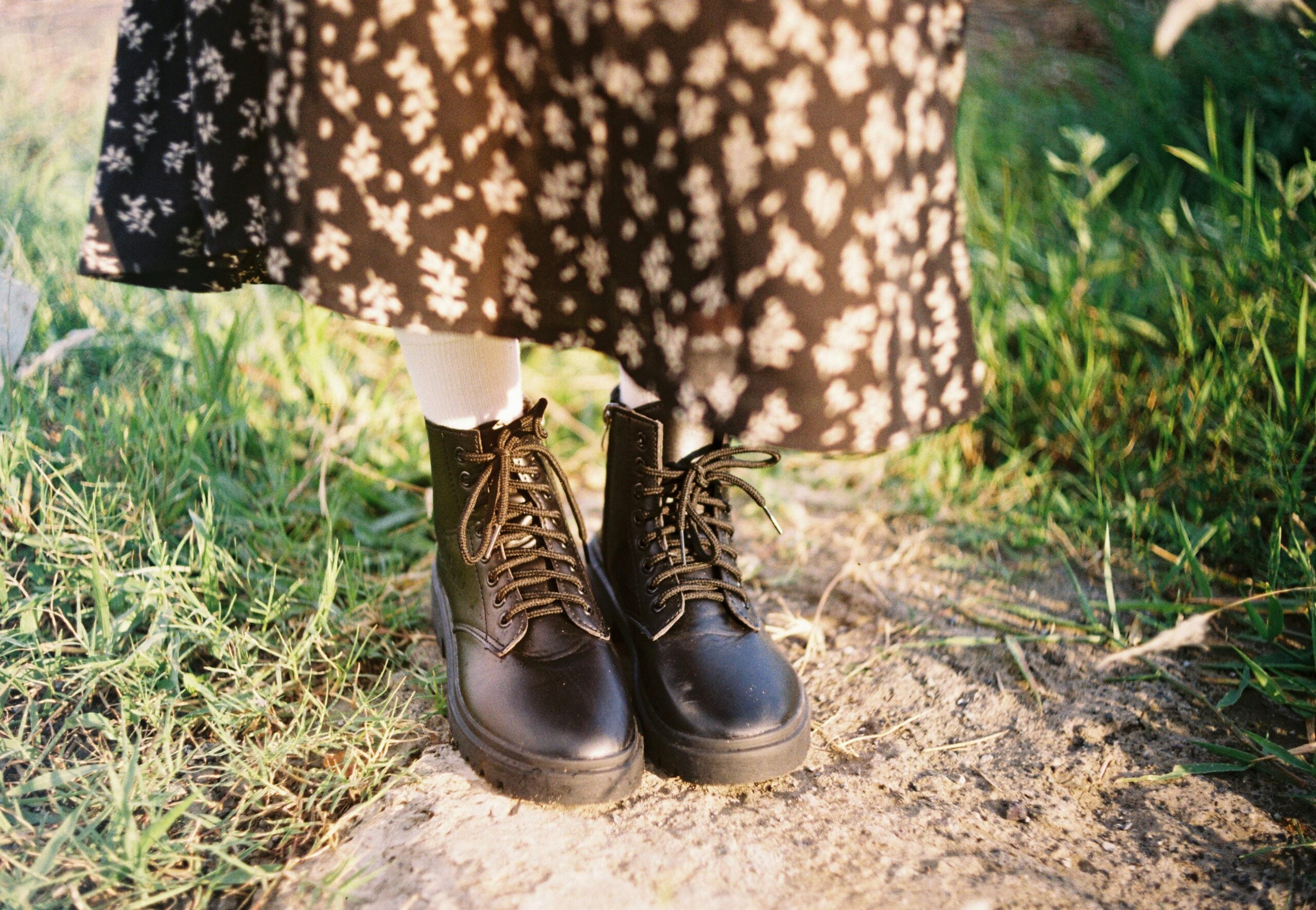
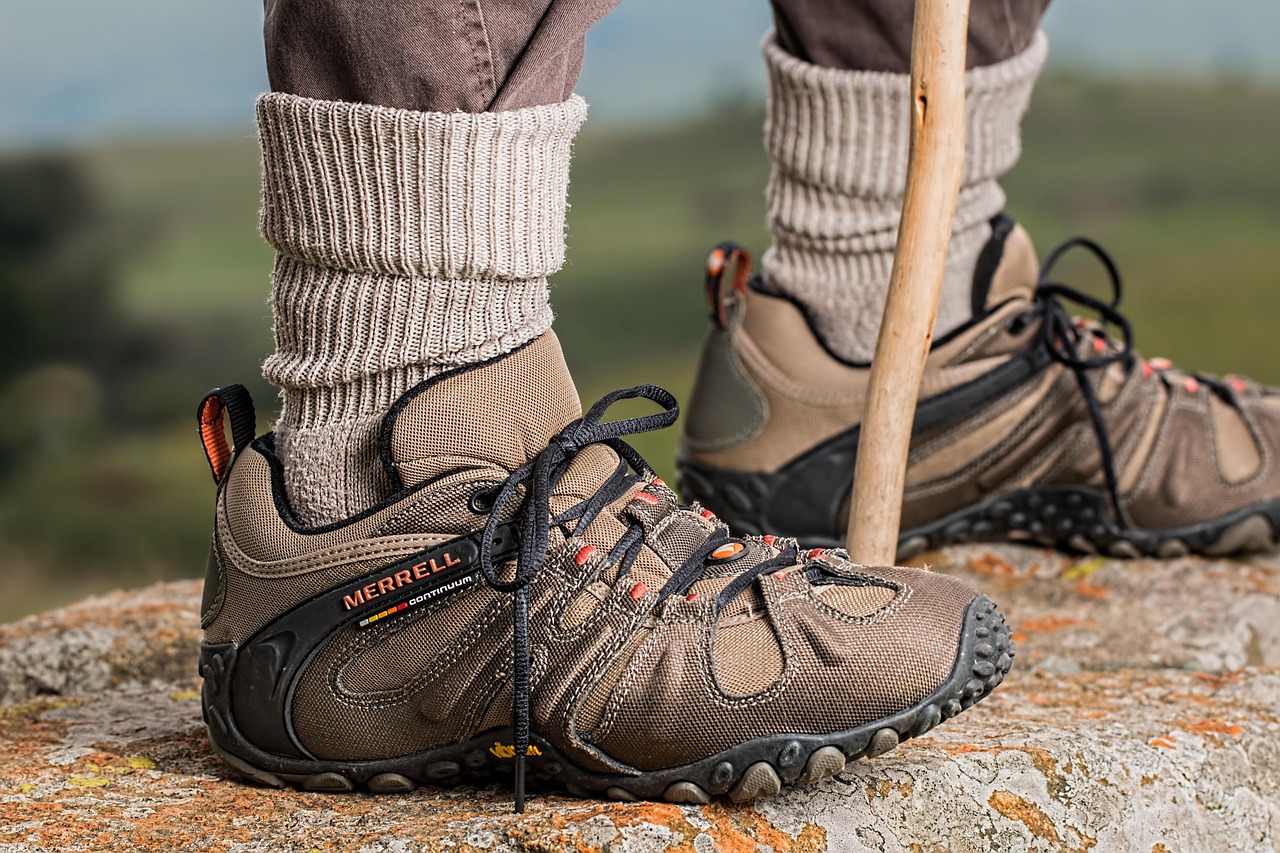
Your shoes are your direct interface with the terrain, making them perhaps your most critical piece of equipment. Proper footwear for uneven terrain should balance several characteristics: traction, ankle support, flexibility, and protection.
Look for outsoles with deep, multidirectional lugs that can grip various surfaces. Vibram and similar rubber compounds offer superior traction on both wet and dry surfaces. The tread pattern matters significantly—widely spaced lugs shed mud better, while tighter patterns provide better grip on rock.
High-Top Versus Low-Cut: The Ankle Support Debate
Traditional wisdom suggested that high-top boots were essential for ankle support on uneven terrain, but recent research has nuanced this perspective. High-top footwear does provide some mechanical restriction of ankle movement, but the primary benefit may be proprioceptive—the physical contact around your ankle enhances your awareness of foot position.
Low-cut trail shoes offer greater freedom of movement and are lighter, which can reduce fatigue over long distances. However, they require stronger ankles and better technique. Consider starting with mid-height boots that offer a compromise between support and mobility, then transition based on your experience and ankle strength.
| Terrain Type | Recommended Footwear | Key Features |
|---|---|---|
| Rocky trails | Sturdy hiking boots | Ankle support, rock plate protection, aggressive tread |
| Muddy paths | Waterproof trail runners | Wide-spaced lugs, water resistance, quick-drying |
| Loose gravel | Mid-height hiking shoes | Stable midsole, deep lugs, toe protection |
| Mixed terrain | All-terrain hiking boots | Versatile tread, moderate ankle support, durable construction |
🧘 Balance Training for Uneven Terrain Confidence
Your ability to navigate challenging surfaces improves dramatically with targeted balance training. The good news is that effective exercises don’t require expensive equipment or gym memberships—you can develop terrain-conquering stability in your living room.
Single-leg balance exercises are foundational. Start by standing on one foot for 30 seconds, gradually increasing duration as you improve. Progress by closing your eyes, standing on an unstable surface like a pillow, or adding dynamic movements like arm circles or gentle torso twists.
Progressive Balance Challenges
Once basic single-leg balance becomes easy, incorporate more complex movements that simulate terrain challenges. Step-ups onto varying height platforms, lateral leg swings, and controlled single-leg squats all develop the specific strength and coordination needed for uneven ground.
- Bosu ball exercises that require constant stabilization
- Wobble board training to strengthen ankle proprioception
- Single-leg deadlifts for posterior chain engagement
- Balance beam walking or line-following exercises
- Yoga poses like tree pose and warrior III
🗺️ Reading Terrain and Planning Your Path
Successful navigation of uneven terrain starts before your foot ever touches the ground. Developing the skill to read landscapes and anticipate challenges allows you to choose optimal routes and prepare for obstacles in advance.
Scan ahead continuously, looking 10-15 feet in front of you rather than at your immediate footfall. This forward vision allows your brain time to plan foot placement and weight distribution. Identify stable rocks, root systems that offer grip, and patches of firm ground among loose terrain.
Recognizing Hazardous Surfaces
Certain surface conditions present elevated risk and require special attention. Wet rocks become extraordinarily slippery, often more treacherous than ice. Moss-covered stones should be avoided when possible. Loose scree—small rocks that shift underfoot—requires a specialized technique of quick, light steps that stay on top of the moving surface rather than sinking in.
Standing water often conceals the true nature of the ground beneath. What appears to be a shallow puddle might hide a deep hole or slick mud. When you must cross wet areas, test depth with a trekking pole first if available, or step carefully with one foot while keeping weight on your rear leg.
💪 Strength Training for Slope Mastery
While technique is crucial, the physical strength to execute proper form throughout a long hike or adventure makes the difference between enjoyable exploration and exhausting struggle. Targeted strength training prepares your muscles for the specific demands of varied terrain.
Focus on exercises that build functional strength rather than isolated muscle development. Lunges in multiple directions—forward, backward, and lateral—prepare your legs for the unpredictable loading patterns of uneven ground. Add variations like walking lunges, reverse lunges with a knee drive, and curtsy lunges to build comprehensive leg strength.
The Essential Muscle Groups
Your quadriceps control your descent and provide power for climbing. Squats, step-ups, and leg presses build this crucial muscle group. Your glutes stabilize your pelvis and generate forward propulsion—develop them with bridges, deadlifts, and clamshells. Calf muscles provide push-off power and ankle stability through exercises like calf raises on flat and inclined surfaces.
Don’t neglect your hip abductors and adductors, which provide lateral stability crucial for side-hill traverses. Lateral band walks, side-lying leg lifts, and Copenhagen planks strengthen these often-overlooked stabilizers.
🌲 Mental Strategies for Confident Navigation
Physical preparation is only half the equation—your mental approach dramatically influences your success and enjoyment on challenging terrain. Fear and anxiety create muscle tension that interferes with the fluid, responsive movement that uneven ground requires.
Practice mindful walking on easier terrain first, bringing conscious awareness to how your feet interact with the ground. Notice how your body naturally adjusts to small irregularities without conscious thought. This awareness builds trust in your body’s innate abilities, reducing anxiety when terrain becomes more challenging.
Building Progressive Confidence
Start with mildly uneven terrain and gradually increase difficulty as your skills develop. This progressive approach builds genuine competence rather than false bravado. Each successful navigation of challenging ground reinforces your capabilities, creating a positive feedback loop of confidence and skill.
When you encounter terrain that feels beyond your current ability, there’s no shame in choosing an alternative route or turning back. True confidence includes honest assessment of your limits and the wisdom to respect them. You can always return when you’re better prepared.
🎒 Essential Gear Beyond Footwear
While shoes form your foundation, several other gear items significantly enhance your safety and confidence on uneven terrain. Trekking poles transform bipedal humans into quadrupeds, dramatically improving stability and reducing joint stress.
Quality poles with shock absorption, comfortable grips, and carbide tips provide reliable support. Learn to adjust pole length appropriately—shorter for uphill, longer for downhill, symmetrical for flat terrain. The proper technique involves planting poles in rhythm with opposite feet, creating a stable four-point contact pattern.
Protective Gear and Safety Equipment
Gaiters prevent debris from entering your shoes, reducing blisters and discomfort. Knee sleeves provide proprioceptive feedback and mild compression that can reduce fatigue. A quality backpack with a hip belt transfers weight to your pelvis, improving balance by lowering your center of gravity.
- Lightweight first aid kit for addressing minor injuries immediately
- Navigation tools—map, compass, or GPS device—to avoid getting lost
- Headlamp for unexpected delays that extend past daylight
- Emergency whistle for signaling if assistance is needed
- Adequate water and high-energy snacks to maintain strength
🌦️ Adapting to Weather and Environmental Conditions
The same trail presents entirely different challenges in varying weather conditions. Rain transforms stable paths into slippery hazards, requiring adjusted technique and increased caution. Wet conditions demand shorter steps, more deliberate foot placement, and reduced speed.
Cold weather can affect your balance and coordination as muscles become less flexible. Extended warm-up before tackling challenging terrain becomes essential. Hot conditions lead to fatigue more quickly, requiring more frequent rest breaks and increased hydration to maintain coordination and decision-making abilities.
Seasonal Terrain Variations
Spring often brings the most treacherous conditions as freeze-thaw cycles create unstable ground and hidden ice patches under leaf cover. Summer’s dry conditions can make trails dusty and loose, while autumn’s fallen leaves conceal obstacles and create slippery surfaces when wet. Winter demands entirely different equipment and techniques, with traction devices like microspikes becoming essential for icy conditions.
🚀 Taking Your Skills to the Next Level
As your fundamental skills solidify, you can expand your capabilities through specialized training and experiences. Trail running on technical terrain combines the balance demands of uneven ground with cardiovascular challenge. The faster pace requires more immediate decision-making and sharper reflexes, significantly advancing your terrain navigation abilities.
Consider taking a wilderness navigation course that includes off-trail travel. Moving through uncharted terrain without established paths demands the highest level of terrain reading and route-finding skill. These experiences build confidence that transfers to all your outdoor adventures.
The Journey of Continuous Improvement
Mastering movement on slopes and uneven terrain isn’t a destination but an ongoing journey of skill development and experience accumulation. Each trail offers new lessons, each season presents different challenges, and each adventure builds your capabilities. Embrace the learning process, celebrate your progress, and always maintain respect for the power and unpredictability of natural landscapes.
The confidence that comes from knowing you can handle challenging terrain opens up entire worlds of adventure previously inaccessible. Mountain ridges, remote wilderness areas, and spectacular viewpoints that require technical approach all become possible when you’ve developed the skills to navigate safely and confidently. The physical benefits of strength and balance extend far beyond hiking, improving your stability and reducing injury risk in daily life as well.
Start where you are, use the techniques and training approaches outlined here, and gradually expand your comfort zone. With patience, practice, and persistence, you’ll develop the capability to explore confidently wherever your adventurous spirit leads you. The trails are waiting—now you have the knowledge to navigate them safely and enjoyably, no matter how steep, rocky, or uneven they may be.