Every step you take sends a ripple of force through your body, affecting everything from your feet to your spine. The surface you walk, run, or exercise on plays a crucial role in determining whether that impact supports healthy movement or contributes to pain and injury over time.

Understanding how different surfaces affect your musculoskeletal system isn’t just for athletes—it’s essential knowledge for anyone who values long-term mobility and joint health. The hardness or softness of the ground beneath your feet can make the difference between comfortable movement and chronic discomfort.
🦴 The Biomechanics of Impact: What Happens When Your Foot Strikes the Ground
When your foot contacts a surface, your body experiences what biomechanics experts call ground reaction force. This force is equal and opposite to the force your body applies to the ground, and it travels upward through your skeletal system in milliseconds.
Your body has evolved remarkable shock absorption mechanisms. Your feet contain 26 bones, 33 joints, and over 100 muscles, tendons, and ligaments working together as natural suspension systems. Your ankles, knees, and hips add additional layers of cushioning through cartilage, synovial fluid, and muscular control.
However, these biological shock absorbers have limits. When surface hardness exceeds your body’s capacity to dissipate force efficiently, the excess stress accumulates in your joints, tendons, and bones. Over time, this repetitive microtrauma can lead to inflammation, degeneration, and injury.
Understanding Surface Hardness: A Spectrum of Ground Types
Not all surfaces are created equal. The hardness scale for walking and running surfaces ranges from extremely soft to unyieldingly hard, each presenting unique benefits and challenges for your body.
Concrete and Asphalt: The Urban Reality
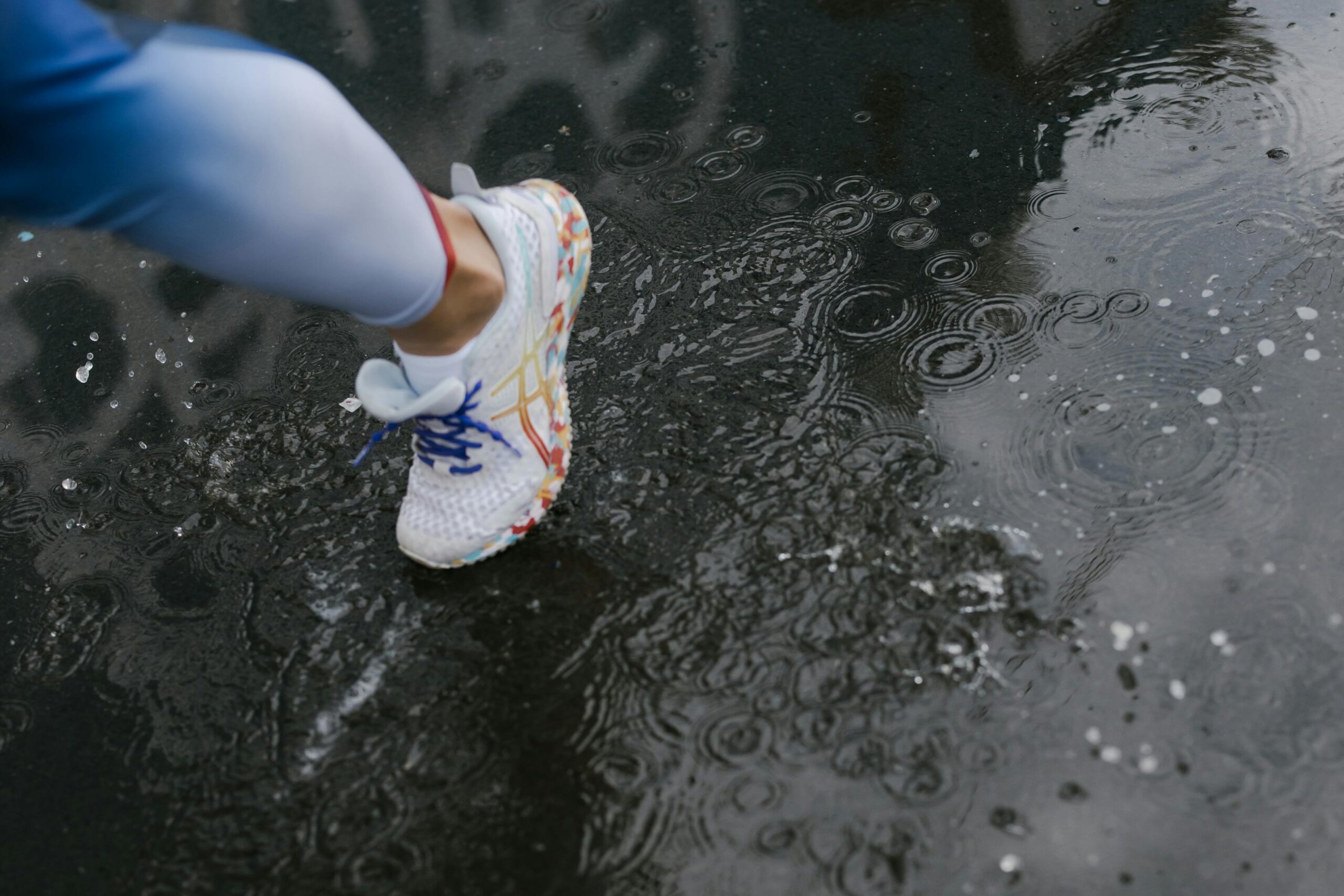
Concrete ranks as one of the hardest surfaces you’ll encounter in daily life. It offers virtually no give, meaning nearly 100% of the impact force returns to your body. Asphalt is marginally softer but still falls into the hard category.
Urban dwellers often have no choice but to navigate these surfaces daily. City sidewalks, parking lots, and streets dominate modern landscapes. While convenient and accessible, prolonged exposure to these surfaces increases your risk of stress fractures, shin splints, plantar fasciitis, and knee problems.
Synthetic Tracks and Sports Surfaces
Purpose-built athletic surfaces offer more forgiveness than concrete. Rubber tracks, turf fields, and gym flooring provide moderate cushioning while maintaining enough firmness for efficient movement and energy return.
These engineered surfaces strike a balance between protection and performance. They reduce impact forces by 20-30% compared to concrete while providing consistent traction and stability.
Natural Terrain: Grass, Dirt, and Trails
Natural surfaces offer variable softness depending on conditions. Well-maintained grass provides excellent cushioning, absorbing significant impact forces. Dirt trails and forest paths offer moderate softness with natural irregularities that engage stabilizing muscles.
Beach sand represents the extreme soft end of the spectrum. While offering maximum cushioning, its instability requires substantially more muscular effort and can strain untrained stabilizers.
⚖️ The Impact Force Equation: How Surface Hardness Affects Your Body
Research consistently demonstrates that surface hardness directly correlates with the magnitude of forces transmitted through your lower extremities. Studies using force plates and motion capture technology reveal fascinating insights into this relationship.
On concrete surfaces, peak impact forces can reach 2-3 times your body weight during walking and 3-5 times during running. These forces occur within 50 milliseconds of foot strike, giving your body minimal time to adapt.
Softer surfaces like grass or rubberized tracks reduce these peak forces by 15-35%, depending on the specific surface properties. This reduction may seem modest, but when multiplied across thousands of steps daily, the cumulative protective effect becomes substantial.
Joint-Specific Vulnerabilities
Different joints respond differently to surface hardness. Your knees, being the largest joints bearing the most load during movement, show particular sensitivity to hard surfaces.
The patellofemoral joint—where your kneecap glides over your femur—experiences increased compression forces on hard surfaces. Over time, this can accelerate cartilage wear and contribute to patellofemoral pain syndrome, one of the most common knee complaints.
Your ankles face different challenges. On hard, flat surfaces, they work within a limited range of motion, potentially weakening the stabilizing muscles and ligaments. Conversely, extremely soft or uneven surfaces demand constant adjustment, which can fatigue these structures and increase injury risk.
Your hips absorb forces that travel upward from below while managing the rotational demands of walking and running. Hard surfaces amplify the repetitive stress on hip cartilage and the labrum, potentially contributing to degenerative changes over decades.
🏃 Activity-Specific Considerations: Matching Surface to Movement
The optimal surface hardness depends significantly on your activity type, intensity, and personal biomechanics. What works for leisurely walking may prove problematic for high-intensity running.
Walking: The Foundation of Daily Movement
Walking generates lower impact forces than running, but most people accumulate far more walking steps daily. The cumulative load matters tremendously for long-term joint health.
For walking, moderately firm surfaces provide the best balance. Grass, packed dirt trails, or rubberized walking tracks offer adequate cushioning without creating instability. When confined to concrete sidewalks, proper footwear becomes your primary defense against excessive impact.
Running: Amplified Forces Demand Careful Selection
Running multiplies impact forces dramatically compared to walking. Your surface choice becomes exponentially more important as speed and distance increase.
Experienced runners often rotate between surfaces strategically. Synthetic tracks for speed work, dirt trails for easy runs, and limited asphalt when necessary. This variation distributes stress patterns differently across joints and tissues, potentially reducing injury risk.
New runners face particular vulnerability on hard surfaces. Without developed muscular strength and neuromuscular coordination, their bodies lack adequate shock absorption. Beginning on softer surfaces like grass or tracks provides a safer entry point.
Standing and Occupational Exposure
People who stand for extended periods—healthcare workers, retail employees, teachers, and food service staff—face unique challenges from surface hardness. Static loading differs from dynamic movement but still stresses joints significantly.
Prolonged standing on concrete warehouse or hospital floors contributes to foot pain, leg fatigue, lower back discomfort, and venous insufficiency. Anti-fatigue mats that provide modest cushioning can reduce these effects substantially.
💪 Adaptive Responses: How Your Body Adjusts to Different Surfaces
Your neuromuscular system continuously adjusts to surface properties, though you might not consciously notice these adaptations. Research shows that your brain receives feedback from proprioceptors in your feet and legs, automatically modulating muscle activation patterns based on surface compliance.
On hard surfaces, your muscles pre-activate more strongly before foot strike, stiffening your leg to better absorb the anticipated impact. This protective strategy works but increases energy expenditure and muscle fatigue.
On soft surfaces, your body adopts different strategies. Muscle activation patterns shift to maintain stability on the yielding substrate. While this reduces impact forces, it increases the work your stabilizing muscles must perform.
The Training Effect
Regular exposure to varied surfaces actually enhances your adaptive capacity. Athletes who train on multiple surface types develop more versatile neuromuscular control and potentially more resilient tissues.
This principle applies beyond athletics. Including varied walking surfaces in your routine—grass, trails, tracks, and controlled amounts of pavement—may strengthen your body’s ability to handle different mechanical demands.
🩺 Clinical Implications: When Surface Choice Becomes Medical Necessity
For individuals with existing joint conditions, surface selection transitions from optimization to necessity. Arthritis, previous injuries, and structural abnormalities demand careful environmental management.
Osteoarthritis and Degenerative Joint Disease
People with knee or hip osteoarthritis experience significantly more pain on hard surfaces. The reduced cartilage cushioning means less biological shock absorption, making external cushioning from the surface critically important.
Clinical guidelines for arthritis management increasingly recognize environmental modification as a key intervention. Avoiding concrete when possible and choosing cushioned surfaces can meaningfully reduce pain and potentially slow disease progression.
Post-Injury Rehabilitation
Recovery from stress fractures, tendinitis, or joint injuries requires graduated return to activity. Surface selection provides a valuable tool for controlling load during rehabilitation.
Physical therapists often begin walking and running reintroduction on grass or tracks before progressing to harder surfaces as tissues heal and strengthen. This staged approach respects biological healing timelines while maintaining fitness.
👟 Footwear as Surface Modification: Your Personal Cushioning System
When you cannot control the surface beneath you, your shoes become your adjustable interface between body and ground. Modern footwear technology offers sophisticated tools for managing impact forces.
Cushioning systems using foam compounds, gel inserts, or air chambers can reduce impact forces by 20-40% compared to minimal footwear. This protection becomes especially valuable on hard surfaces where natural cushioning doesn’t exist.
However, more cushioning isn’t always better. Excessive softness can impair proprioception and stability while potentially encouraging harder foot strikes due to reduced sensory feedback. The optimal cushioning level depends on your biomechanics, the surface, and your activity.
The Minimalist Debate
Minimalist footwear advocates argue that natural foot function with less cushioning promotes healthier biomechanics. Research shows mixed results, with benefits for some individuals but increased injury risk for others, particularly during transition periods.
The surface-footwear interaction matters enormously in this debate. Minimalist shoes on soft, natural surfaces may indeed promote beneficial adaptations. The same footwear on concrete city streets might exceed your biological capacity for impact absorption.
🌳 Practical Strategies: Protecting Your Joints in Real-World Environments
Understanding surface hardness principles means little without practical application. Here are evidence-based strategies for protecting your joints across various scenarios.
- Seek softer surfaces whenever practical: Choose grass or dirt paths over concrete sidewalks when safe routes exist. The small detour protects your joints thousands of times per walk.
- Rotate your routes: Vary your walking or running paths to distribute stress differently. Monday on trails, Wednesday on a track, Friday on paths—variety protects.
- Invest in quality footwear: Good shoes provide essential protection on hard surfaces. Replace worn shoes before cushioning degrades completely.
- Use targeted cushioning: Insoles or orthotics can add surface-specific protection, especially if you spend long periods on concrete floors.
- Listen to your body: Pain signals excessive stress. If your knees, hips, or feet hurt more on certain surfaces, that feedback deserves respect and modification.
- Strengthen supporting structures: Strong muscles, tendons, and ligaments better absorb impact regardless of surface. Regular strength training provides systemic protection.
- Consider anti-fatigue solutions: If you stand on hard floors occupationally, anti-fatigue mats reduce cumulative stress substantially.
📊 The Long-Term Perspective: Cumulative Load and Joint Health
Joint degeneration rarely results from single catastrophic events. Instead, decades of accumulated microtrauma gradually exceed your tissues’ capacity for repair and regeneration. Surface hardness plays a starring role in this long-term equation.
Consider someone who walks 5,000 steps daily—a modest amount by current recommendations. Over a year, that’s 1.825 million steps. Over 30 years, nearly 55 million steps. The difference between absorbing those steps on concrete versus softer surfaces compounds dramatically across that timeline.
Research comparing populations with different surface exposures supports this cumulative impact theory. Populations with greater access to natural surfaces show lower rates of certain degenerative joint conditions, even after controlling for other variables like activity level and body weight.
🔄 Balance and Adaptation: The Middle Path to Joint Longevity
The optimal approach isn’t avoiding hard surfaces entirely—complete avoidance often proves impractical and might leave you unprepared for unavoidable hard surface exposure. Instead, balanced exposure that respects your body’s limits while maintaining adaptation promotes the healthiest outcomes.
Think of surface hardness management as part of your overall joint health portfolio, alongside appropriate activity levels, strength training, flexibility work, and body weight management. No single factor determines your joint destiny, but surface awareness provides a powerful lever you can control.
Your stride—whether walking through daily life or pursuing athletic goals—deserves protection. The ground beneath your feet offers either ally or adversary in maintaining joint health. By understanding surface hardness and making informed choices, you transform every step into an investment in decades of comfortable, capable movement ahead.
The path to healthier joints literally begins with the path you choose to walk. Select wisely, vary regularly, cushion appropriately, and your legs and joints will thank you with years of reliable, pain-free service. Your future mobility depends on the surfaces you choose today. 🚶