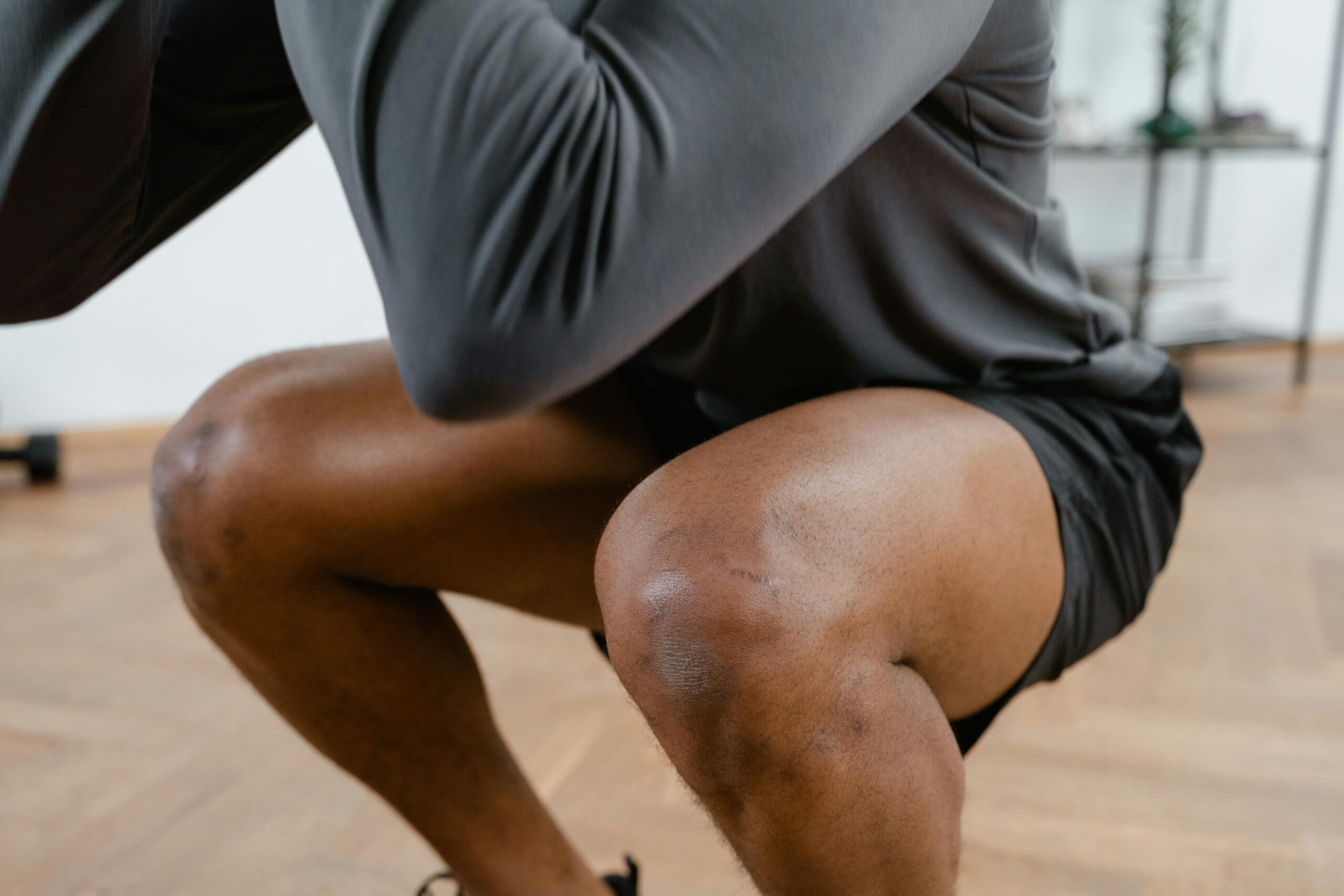
Knee valgus, commonly known as “knock knees,” affects millions of people worldwide and can significantly impact athletic performance, daily activities, and long-term joint health. This alignment issue occurs when your knees cave inward during movement, creating unnecessary stress on ligaments, cartilage, and surrounding muscles.

Understanding how to correct knee valgus through targeted strength training is essential for anyone looking to improve knee stability, prevent injury, and enhance overall lower body function. Whether you’re an athlete, fitness enthusiast, or simply someone dealing with knee discomfort, this comprehensive guide will provide you with the tools and knowledge needed to build stronger, more resilient knees.
🦵 Understanding Knee Valgus: What’s Really Happening
Knee valgus represents a biomechanical deviation where the knees collapse inward relative to the hips and feet. This misalignment places excessive stress on the medial (inner) knee structures, including the MCL (medial collateral ligament) and can contribute to conditions like patellofemoral pain syndrome, IT band syndrome, and even ACL tears.
The underlying causes of knee valgus are multifactorial. Weak hip abductors, particularly the gluteus medius and minimus, fail to control femoral rotation. Tight hip adductors pull the knees inward. Limited ankle mobility restricts proper movement patterns. Additionally, poor neuromuscular control means your brain hasn’t established efficient movement patterns to keep your knees tracking properly.
The Biomechanical Chain Reaction
When knee valgus occurs, it creates a domino effect throughout your lower body. The femur rotates internally, the tibia compensates with external rotation, and the foot often collapses into pronation. This chain reaction distributes forces unevenly across your knee joint, accelerating wear and tear on cartilage and increasing injury risk during activities like running, jumping, or squatting.
💪 The Foundation: Hip Strength for Knee Stability
Your hips control your knees more than you might realize. The gluteus medius, located on the side of your hip, acts as the primary stabilizer preventing knee valgus. When this muscle is weak or underactive, your femur rotates inward unchecked, causing your knees to collapse during movement.
Essential Hip Strengthening Exercises
Clamshells: Lie on your side with knees bent at 45 degrees, feet together. Keeping your feet touching, lift your top knee while maintaining pelvic stability. Perform 3 sets of 15-20 repetitions per side. This exercise isolates the gluteus medius, teaching it to fire properly and control femoral rotation.
Side-Lying Hip Abduction: Lying on your side with the bottom leg bent for stability, lift your top leg straight up toward the ceiling, keeping your toe pointed forward. This movement directly targets hip abductor strength and endurance. Complete 3 sets of 12-15 repetitions per side, focusing on controlled movement without using momentum.
Monster Walks: Place a resistance band around your thighs just above your knees. Assume a quarter squat position and walk sideways, maintaining tension on the band. The constant resistance forces your hip abductors to work throughout the entire movement. Perform 3 sets of 10 steps in each direction.
Single-Leg Deadlifts: This exercise combines hip strengthening with balance and proprioception. Standing on one leg, hinge at the hip while extending the opposite leg behind you. Keep your knee slightly bent and your back neutral. This movement strengthens the entire posterior chain while challenging your ability to maintain proper knee alignment. Start with bodyweight and progress to holding dumbbells. Perform 3 sets of 8-10 repetitions per leg.
🎯 Targeted Knee Stability Exercises
While hip strength provides the foundation, specific exercises that challenge knee stability in functional positions are equally important for correcting valgus patterns and building resilient joints.
Terminal Knee Extensions (TKEs)
Attach a resistance band to a sturdy anchor at knee height. Loop it around the back of your knee and step back to create tension. With your foot flat on the ground, straighten your knee against the band’s resistance, focusing on the last 15-20 degrees of extension. This exercise specifically targets the vastus medialis oblique (VMO), the inner quadriceps muscle crucial for proper patellar tracking. Perform 3 sets of 15-20 repetitions per leg.
Step-Downs with Mirror Feedback
Stand on a 6-8 inch box or step, positioning yourself in front of a mirror. Slowly lower your opposite foot toward the ground, watching carefully to ensure your knee tracks over your second toe without caving inward. This exercise provides immediate visual feedback, helping retrain your neuromuscular patterns. Start with 2 sets of 10 repetitions per leg, gradually increasing as your control improves.
Bulgarian Split Squats
Position your rear foot on a bench behind you with your front foot planted firmly on the ground. Lower into a lunge position, maintaining an upright torso and ensuring your front knee tracks in line with your toes. This unilateral exercise challenges stability while building significant strength throughout your lower body. Complete 3 sets of 8-12 repetitions per leg.
🏋️ Progressive Loading: Building Bulletproof Knees
Once you’ve established foundational strength and proper movement patterns, progressive loading becomes essential for long-term knee health and performance enhancement.
The Goblet Squat Progression
Begin with goblet squats, holding a kettlebell or dumbbell at chest level. This front-loaded position naturally encourages proper torso position and knee tracking. Focus intensely on pushing your knees outward throughout the entire movement, actively fighting against valgus collapse. Start with 3 sets of 10 repetitions and gradually increase weight while maintaining perfect form.
Box Squats for Motor Control
Box squats provide a valuable tool for teaching proper squat mechanics while eliminating the fear of losing control at the bottom position. Squat back to a box set at parallel height, briefly touch down, then drive upward. This pause eliminates momentum and requires greater control. The defined depth also provides consistent feedback for motor learning. Perform 4 sets of 6-8 repetitions with moderate weight.
Trap Bar Deadlifts
The trap bar deadlift offers significant loading potential with reduced technical complexity compared to conventional deadlifts. The neutral grip position and center of gravity make it easier to maintain proper knee alignment while building tremendous posterior chain strength. Work up to 3-4 sets of 5-8 repetitions with challenging but manageable weight.
🧘 Mobility Work: The Missing Piece
Strength without adequate mobility creates compensation patterns that can perpetuate knee valgus. Addressing mobility restrictions in your ankles and hips allows your body to move through proper ranges of motion without compensating.
Ankle Mobility Drills
Limited ankle dorsiflexion forces your knees to travel inward during squatting movements. Perform wall ankle mobilizations by placing your toes 4-5 inches from a wall and driving your knee forward to touch the wall without lifting your heel. Hold for 2 seconds and repeat 10 times per side. Gradually increase the distance as mobility improves.
Hip Flexor Stretching
Tight hip flexors alter pelvic positioning and inhibit glute activation. Perform half-kneeling hip flexor stretches with posterior pelvic tilt, holding each stretch for 45-60 seconds per side. This position specifically targets the psoas while teaching proper pelvic control.
Hip Internal Rotation Mobility
Sit with both knees bent and feet wider than hip-width. Let both knees fall to one side, creating internal rotation at the hip. Hold this position for 30-45 seconds, then switch sides. Limited hip internal rotation often contributes to compensatory knee valgus during functional movements.
⚡ Plyometric Training for Dynamic Stability
Once you’ve built adequate strength and established proper movement patterns, introducing controlled plyometric exercises teaches your body to maintain knee alignment during rapid, explosive movements.
Box Jumps with Landing Focus
Rather than focusing on jump height, emphasize landing quality. Jump onto a box and land softly with knees tracking outward, absorbing force through your entire lower body. Step down rather than jumping down initially. This approach prioritizes movement quality over performance metrics. Start with 3-4 sets of 5 repetitions on a comfortable height.
Lateral Bounds
Jump laterally from one leg to the other, sticking each landing for 2-3 seconds before repeating. This exercise specifically challenges your ability to control valgus forces during single-leg deceleration. Perform 3 sets of 6 bounds per direction, focusing entirely on landing mechanics rather than distance.
📊 Sample Weekly Training Schedule
| Day | Focus | Key Exercises |
|---|---|---|
| Monday | Hip Strength & Bilateral Loading | Clamshells, Monster Walks, Goblet Squats, TKEs |
| Wednesday | Unilateral Strength & Stability | Single-Leg Deadlifts, Bulgarian Split Squats, Step-Downs |
| Friday | Progressive Loading & Plyometrics | Trap Bar Deadlifts, Box Squats, Box Jumps, Lateral Bounds |
| Daily | Mobility Work | Ankle Mobilizations, Hip Flexor Stretches, Hip IR Mobility |
🔍 Common Mistakes to Avoid
Many people unknowingly sabotage their progress by making preventable errors during their knee strengthening journey.
Rushing progression: Adding weight or complexity before establishing proper movement patterns reinforces faulty mechanics. Spend adequate time mastering each exercise with perfect form before advancing. Quality always supersedes quantity when correcting biomechanical issues.
Neglecting single-leg work: Bilateral exercises like squats allow your dominant side to compensate for weakness. Unilateral training exposes and addresses asymmetries that contribute to knee valgus. Balance your program with adequate single-leg exercises.
Ignoring mobility restrictions: No amount of strengthening can overcome mobility limitations that force compensatory movement patterns. Address ankle and hip mobility concurrently with strength training for optimal results.
Training through pain: Discomfort during exercise indicates improper loading, technique issues, or underlying problems requiring attention. Sharp or worsening pain demands immediate modification or professional evaluation. Building stronger knees requires intelligent programming, not toughness through pain.
🎖️ Measuring Progress Beyond the Mirror
Objective measurements provide valuable feedback about your knee strengthening journey and help identify areas requiring additional attention.
Video analysis offers powerful insights into movement quality. Record yourself performing squats, step-downs, and single-leg exercises from the front. Compare videos every 2-3 weeks to observe improvements in knee tracking and alignment. This visual feedback accelerates motor learning and keeps you accountable.
The single-leg squat test provides a functional assessment of knee stability. Stand on one leg and squat down as far as possible while maintaining balance and proper knee alignment. Score yourself based on depth achieved and degree of knee control. Reassess monthly to track improvements.
Strength benchmarks offer concrete goals. Work toward performing 10 quality single-leg deadlifts per side with 25% of your bodyweight, 12 Bulgarian split squats per leg with 20% bodyweight, and 5 box jumps with perfect landing mechanics on a 20-inch box.
💡 Integration into Sports and Daily Life
The ultimate goal extends beyond gym performance—applying improved knee stability to athletic endeavors and everyday activities creates lasting functional benefits.
Athletes should gradually integrate corrective exercises into their existing training programs rather than treating them as separate entities. Perform hip activation work during warm-ups, incorporate unilateral strength exercises into lower body training days, and emphasize landing mechanics during sport-specific drills.
For daily activities, conscious attention to movement quality during routine tasks reinforces proper patterns. Notice your knee alignment when climbing stairs, getting up from chairs, or carrying groceries. These micro-practices accumulate into significant improvements in automatic movement patterns.
🌟 Long-Term Maintenance and Continued Growth
Correcting knee valgus isn’t a temporary fix—it requires ongoing commitment to maintain improvements and prevent regression into old movement patterns.
Continue performing hip strengthening exercises 2-3 times weekly even after achieving initial goals. These exercises serve as movement preparation before workouts and injury prevention maintenance during lighter training phases. The gluteus medius requires consistent stimulation to maintain its stabilizing function.
Periodically reassess your movement quality, especially after training breaks, injuries, or changes in activity level. Movement patterns can deteriorate during periods of reduced activity or when learning new sports skills. Regular check-ins ensure you maintain proper mechanics.
Progressive overload remains essential for continued strength development. As exercises become easier, increase resistance, volume, or complexity to provide ongoing stimulus for adaptation. Stagnant programming leads to plateaus in both strength and movement quality.
🚀 Taking Action Today
Building stronger knees and correcting valgus alignment begins with a single session. Start with the foundational hip strengthening exercises—clamshells, side-lying abduction, and monster walks. These require minimal equipment and can be performed anywhere, making them perfect starting points.
Dedicate 15-20 minutes three times weekly to these exercises for the first two weeks. Focus exclusively on feeling the target muscles working and maintaining perfect form. This initial phase establishes the foundation upon which all subsequent progress builds.
After two weeks of consistent foundational work, begin incorporating the knee stability exercises and gradually progress toward loaded movements. Remember that sustainable change occurs through consistent effort over time, not dramatic overnight transformations.
Your knees support you through countless steps, jumps, and movements throughout your lifetime. Investing time in building proper alignment, strength, and stability pays dividends in improved performance, reduced pain, and enhanced quality of life. The comprehensive routine outlined here provides a proven pathway to stronger, more resilient knees capable of supporting your active lifestyle for years to come. Start today, stay consistent, and trust the process as your body adapts and grows stronger with each training session.