Every runner knows the exhilaration of hitting the pavement, trail, or track. Yet, beneath the rhythm of your footfalls lies a critical question: which running surface poses the greatest risk to your body?

Understanding the nuances of different running surfaces can mean the difference between a sustainable training routine and chronic injury. From the unforgiving hardness of concrete to the unpredictable terrain of mountain trails, each surface presents unique challenges and benefits that every runner should master.
🏃 The Science Behind Surface Impact and Running Injuries
When your foot strikes the ground, forces equivalent to two to three times your body weight travel through your musculoskeletal system. The surface beneath you determines how these impact forces are absorbed, distributed, and returned. Harder surfaces generate greater ground reaction forces, while softer surfaces require more muscular stabilization.
Research published in sports medicine journals consistently demonstrates that surface hardness correlates directly with injury rates, particularly stress fractures, shin splints, and joint inflammation. However, extremely soft surfaces present their own risks by demanding excessive stabilization from smaller muscle groups and connective tissues.
The body adapts remarkably well to consistent surfaces, but sudden transitions between drastically different terrains increase injury vulnerability significantly. This phenomenon explains why runners who exclusively train on treadmills often experience discomfort when transitioning to outdoor routes.
Concrete and Asphalt: The High-Risk Urban Staples
Concrete sidewalks represent the hardest commonly used running surface, offering virtually zero shock absorption. The unyielding nature of concrete means your legs must absorb nearly all impact forces, placing tremendous stress on bones, joints, and connective tissues.
⚠️ Concrete: Maximum Risk, Minimum Forgiveness
Concrete ranks as the highest-risk running surface for several compelling reasons. Its composition—cement, aggregate, and water—creates an incredibly dense material approximately ten times harder than asphalt. This surface provides no cushioning whatsoever, forcing your body to bear the full brunt of repetitive impact.
Runners who log significant mileage on concrete sidewalks report higher rates of stress fractures, particularly in the metatarsals, tibiae, and femurs. The constant pounding also accelerates cartilage wear in knee and hip joints, potentially contributing to early-onset osteoarthritis.
The cambered nature of many sidewalks introduces an additional risk factor. Running consistently on sloped surfaces forces biomechanical adaptations that can lead to iliotibial band syndrome, hip imbalances, and uneven wear patterns in running shoes.
Asphalt: Marginally Better but Still Demanding
Road asphalt offers slightly more give than concrete, making it the preferred choice among road runners. The petroleum-based binder in asphalt provides minimal shock absorption—approximately 10% more cushioning than concrete—which translates to measurably reduced impact forces.
Despite being marginally softer, asphalt still qualifies as a hard surface that demands respect. Long-distance runners training exclusively on asphalt roads experience overuse injuries at predictable rates, particularly when weekly mileage exceeds individual tolerance thresholds.
Fresh asphalt provides slightly better shock absorption than aged, weathered pavement. Sun exposure and freeze-thaw cycles harden asphalt over time, gradually reducing whatever minimal cushioning properties it originally possessed.
🏃♀️ Treadmill Running: The Controlled Environment Paradox
Treadmills occupy a fascinating middle ground in surface risk assessment. Modern treadmill decks incorporate cushioning systems that reduce impact forces by 15-40% compared to concrete, depending on the machine quality and settings used.
Advantages of Treadmill Training
The consistent, predictable surface eliminates terrain variability, reducing ankle sprain risk and allowing precise control over workout parameters. The belt’s slight give cushions each foot strike more effectively than any outdoor hard surface, making treadmills particularly valuable for injury recovery and high-mileage training blocks.
Climate control represents another significant advantage. Running indoors eliminates weather-related hazards like ice, excessive heat, or poor visibility conditions that compound surface-related risks.
Hidden Risks of Treadmill Dependence
Extended treadmill training creates biomechanical adaptations that don’t translate well to outdoor running. The moving belt artificially assists with stride turnover, potentially weakening posterior chain muscles responsible for propulsion. This dependency becomes problematic when transitioning to stationary outdoor surfaces.
The psychological monotony of treadmill running shouldn’t be dismissed either. Mental fatigue can lead to compromised form and concentration lapses that increase injury risk even on a supposedly safer surface.
Many runners also make the mistake of setting inappropriate inclines. A perfectly flat treadmill doesn’t replicate outdoor running biomechanics; a 1-2% incline more accurately simulates road running physics.
Synthetic Tracks: Engineered for Performance and Safety
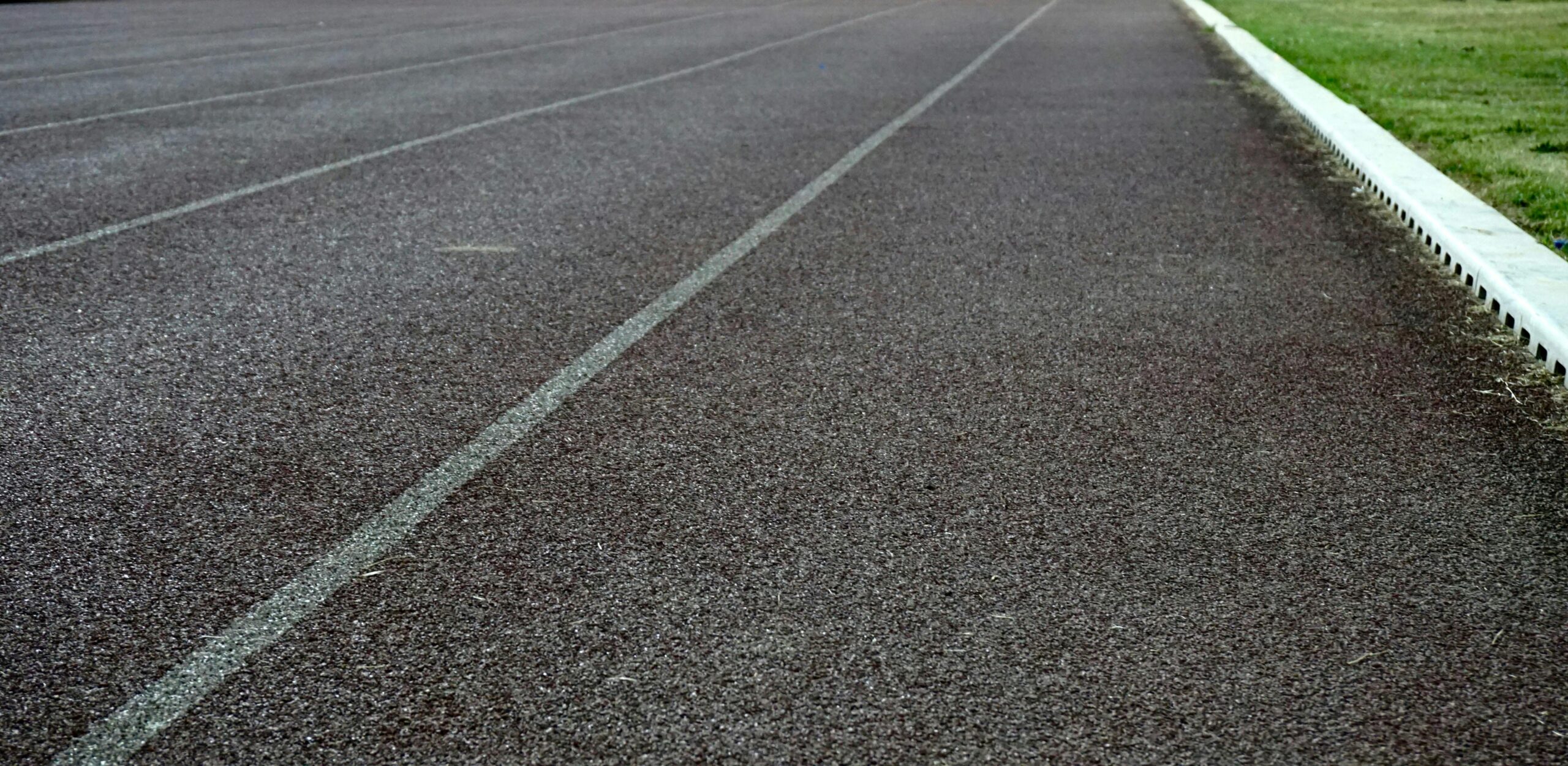
Modern synthetic running tracks represent purpose-built surfaces optimized for speed and injury prevention. Polyurethane tracks provide excellent shock absorption while maintaining responsive energy return characteristics.
Track surfaces typically reduce impact forces by 20-35% compared to concrete, making them considerably gentler on joints and connective tissues. The consistent, level surface eliminates terrain unpredictability, allowing runners to focus purely on performance metrics.
However, tracks present unique injury risks related to repetitive turning. The constant counterclockwise motion around 200-meter or 400-meter ovals places asymmetric stress on the body, potentially causing hip imbalances, IT band issues, and uneven muscle development.
Older tracks composed of rubberized asphalt or cinder offer less cushioning than modern polyurethane surfaces. Track quality varies tremendously, making surface assessment crucial before high-intensity workouts or long runs.
🌳 Natural Surfaces: Grass, Dirt, and Trail Running
Natural surfaces offer compelling advantages for runners seeking joint-friendly alternatives to hard pavement. These surfaces provide superior shock absorption while engaging stabilizing muscles more comprehensively than uniform artificial surfaces.
Grass: The Joint-Friendly Classic
Well-maintained grass fields rank among the most forgiving running surfaces available. Grass absorbs impact forces exceptionally well, reducing stress on bones and joints significantly compared to any hard surface option.
The uneven nature of grass terrain activates stabilizing muscles throughout the feet, ankles, and hips, potentially strengthening these systems against injury. Many elite runners incorporate regular grass sessions specifically for active recovery and injury prevention.
However, grass presents notable disadvantages. Hidden irregularities, holes, and divots create significant ankle sprain risk. Wet grass becomes slippery, compromising traction and increasing fall risk. The soft surface also requires greater muscular effort to achieve the same pace as hard surfaces, potentially leading to calf and Achilles tendon strain for unprepared runners.
Dirt Trails and Packed Earth
Smooth dirt paths offer an excellent compromise between cushioning and stability. Packed earth provides moderate shock absorption while maintaining relatively predictable footing compared to technical trails.
The natural variation in dirt trail terrain strengthens proprioceptive systems and challenges stabilizing muscles, potentially reducing injury risk over time. Trail running also reduces the repetitive stress patterns that develop from training exclusively on uniform surfaces.
Weather dramatically affects dirt trail conditions. Rain transforms firm paths into slippery, unstable surfaces. Prolonged dry conditions harden dirt trails until they approach asphalt-like hardness, eliminating cushioning benefits.
⛰️ Technical Trails and Gravel: Adventure with Consequences
Technical mountain trails and loose gravel surfaces present the highest acute injury risk among commonly used running terrains. Rocks, roots, uneven grades, and unstable footing demand constant vigilance and rapid biomechanical adjustments.
Trail running enthusiasts accept elevated ankle sprain, fall, and contusion risks in exchange for spectacular scenery, engaging terrain, and comprehensive muscular development. The variable surfaces, elevation changes, and technical challenges provide unmatched training stimulus for balance, coordination, and full-body strength.
Gravel paths occupy a unique position in risk assessment. Loose gravel over firm substrate creates unstable footing that challenges ankle stability with every step. However, the surface itself provides good shock absorption, reducing impact-related overuse injury risk.
Runners transitioning to technical terrain should progress gradually, allowing neuromuscular systems time to adapt to increased stability demands. Trail running shoes with aggressive tread patterns and protective features significantly reduce injury risk on these challenging surfaces.
Sand Running: Maximum Effort, Maximum Caution
Beach running deserves special mention for presenting extreme physical demands. Soft sand requires 1.6 times more energy expenditure than firm surfaces, placing tremendous demands on calf muscles, Achilles tendons, and plantar fascia.
The unstable surface forces constant micro-adjustments, strengthening stabilizing muscles but simultaneously increasing strain on these smaller muscle groups. Cambered beach slopes compound these challenges, creating asymmetric loading patterns similar to sidewalk running.
Firm, packed sand near the waterline offers better stability while maintaining some cushioning benefits. However, even this improved surface demands respect and gradual adaptation to prevent overuse injuries.
🎯 Strategic Surface Selection for Optimal Training
Elite runners and coaches understand that surface variety represents a powerful training tool. Periodically rotating between different terrains provides diverse training stimuli while distributing stress across different tissue structures.
Weekly Surface Rotation Strategy
An intelligent training week might incorporate hard surface speed work, track intervals, recovery runs on grass or trails, and long runs on asphalt or dirt paths. This variation prevents repetitive stress accumulation while developing comprehensive athleticism.
Recovery runs particularly benefit from softer surfaces. Grass, dirt trails, or well-cushioned treadmills reduce impact forces when tissues are already fatigued from quality workouts, lowering injury risk during vulnerable periods.
Speed workouts and race-specific training should occur on surfaces similar to goal race conditions. Runners preparing for road marathons need substantial pavement exposure despite its higher injury risk, building specific adaptations required for race day performance.
Adapting to New Surfaces Safely
Transitioning between drastically different surfaces requires thoughtful progression. Runners switching from treadmills to roads should initially limit outdoor mileage to 25-30% of usual volume, gradually increasing over 3-4 weeks as tissues adapt.
Similarly, pavement runners adding trail sessions should start with smooth, non-technical paths before progressing to challenging terrain. Begin with 15-20 minute trail efforts, slowly extending duration as ankle stability and confidence develop.
Injury Risk Rankings: The Complete Surface Hierarchy
Based on impact forces, stability demands, and injury research, running surfaces rank from highest to lowest injury risk:
- Concrete sidewalks: Maximum impact forces, zero cushioning, often cambered
- Aged asphalt: Very hard, minimal shock absorption, weather-damaged surfaces increase fall risk
- Technical mountain trails: High acute injury risk from unstable footing, rocks, and roots
- Loose gravel: Unstable surface demanding constant ankle stabilization
- Soft sand: Extreme muscular demands, asymmetric loading on cambered beaches
- Fresh asphalt: Hard but marginally softer than concrete, predictable surface
- Basic treadmills: Moderate cushioning, consistent surface, biomechanical limitations
- Smooth dirt trails: Good shock absorption, moderate stability demands
- Quality treadmills: Excellent cushioning, controlled environment, perfect for recovery
- Modern synthetic tracks: Engineered cushioning with energy return, predictable surface
- Well-maintained grass: Superior shock absorption, low impact forces, engages stabilizers
📱 Technology Tools for Surface-Smart Training
Modern running apps can help optimize surface selection by tracking where you run and monitoring performance across different terrains. Apps like Strava and Garmin Connect allow detailed route analysis, helping runners identify excessive concrete exposure or inadequate surface variety.
Wearable technology increasingly incorporates ground contact time, vertical oscillation, and impact force metrics that vary significantly across different surfaces. Analyzing these parameters helps runners understand how their bodies respond to various terrains, guiding intelligent training decisions.
Surface-Specific Footwear Considerations
Shoe selection should complement surface characteristics. Maximum cushioning shoes help mitigate hard pavement impact forces, while minimalist shoes may work better on softer, natural surfaces where ground feel enhances stability.
Trail-specific shoes with aggressive lugs, rock plates, and reinforced uppers dramatically reduce injury risk on technical terrain. Conversely, wearing trail shoes on pavement accelerates wear and provides unnecessary features that compromise road running efficiency.
Rotating between multiple shoe models distributes stress differently across tissues, potentially reducing overuse injury risk. Pair this rotation with surface variety for comprehensive injury prevention strategy.
🏥 When Surface Selection Becomes Medical Necessity
Injured or injury-prone runners must prioritize surface selection as rehabilitation strategy. Stress fracture recovery demands exclusive soft-surface running until bone healing completes. Achilles tendinopathy patients should avoid sand and excessive trail running that overloads damaged tissues.
Runners with osteoarthritis benefit tremendously from grass, track, or treadmill training that reduces joint loading. Conversely, those with chronic ankle instability might avoid technical trails until proprioceptive rehabilitation strengthens these systems.
Working with sports medicine professionals helps identify surface modifications appropriate for specific injury patterns and recovery stages.
Building Your Personal Surface Strategy
Developing a personalized approach to surface selection requires honest assessment of your injury history, biomechanical strengths and weaknesses, training goals, and available running environments.
Runners with robust bone density, strong stabilizing muscles, and no injury history can handle higher concrete and technical trail percentages. Those with stress fracture history or joint concerns should emphasize softer surfaces while strategically incorporating harder terrain.
Geographic location constrains surface options, but most environments offer more variety than runners typically utilize. Urban runners can seek out parks, tracks, and treadmill facilities. Rural runners often have dirt road and trail access complementing their pavement routes.
The key lies in intentionality—making conscious surface choices aligned with training phase, recovery status, and long-term sustainability rather than defaulting to whatever’s most convenient.
Making Peace with Imperfect Surfaces 🌟
Perfect running surfaces don’t exist outside laboratory settings. Every terrain presents tradeoffs between cushioning, stability, convenience, and specific training benefits. The goal isn’t avoiding all risky surfaces but rather managing exposure intelligently across your training lifecycle.
Even concrete has its place—short doses build bone density and prepare runners for race-day realities. Technical trails strengthen stabilizers and mental toughness despite acute injury risks. Treadmills provide valuable recovery tools despite biomechanical limitations.
Master runners understand that surface wisdom develops gradually through years of experimentation, occasional mistakes, and attentive listening to their bodies. They recognize warning signs of excessive hard-surface exposure—persistent soreness, declining performance, subtle gait changes—and adjust before minor issues become major injuries.
By understanding the risk profile of each running surface and strategically rotating between terrains, you transform surface selection from passive circumstance into powerful training tool. Your running longevity depends not just on how much you run, but where you choose to run and how intelligently you manage the ground beneath your feet.